
Blastocystis: Friend or Foe in Your Gut?
What if we have only been looking at part of the gut microbiome?
For more than two decades, gut health research has been dominated by one group of organisms: bacteria. We talk about “good” and “bad” bacteria, probiotic strains and bacterial diversity. Yet your gut is home to a far larger community. Fungi, viruses, archaea and single-celled organisms called protists live there too, and they interact constantly with your bacteria and with you.
One of these protists, Blastocystis, is now attracting serious scientific attention. Once labelled a parasite, it is increasingly linked with a more diverse gut microbiome, lower gut inflammation and healthier cardiometabolic profiles. In November 2026, the US National Institutes of Health (NIH) awarded five years of research funding to study it in more depth.
In this article, I review the key evidence on Blastocystis and the gut microbiome. I explain how it relates to biomarkers we use in clinical practice, and what it means for you, whether you are a patient curious about your gut or a colleague interpreting a stool report.
The gut microbiome beyond bacteria
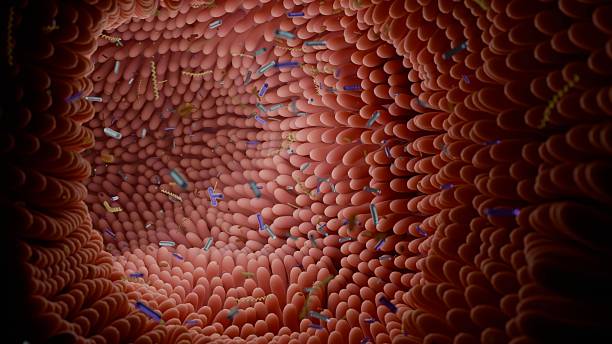
Your gut microbiota spans all three domains of life (bacteria, archaea and eukaryotes), as well as viruses. Because bacteria are the most abundant group, most studies over recent decades have focused on them. The other communities are sometimes called the “dark matter” of the microbiome:
- The mycobiome (fungi). Gut fungi such as Candida and Saccharomyces form a dynamic community. It changes with diet and is far more variable over time than the bacterial community. Fungal composition differs, for example, between vegetarians and people on a typical Western diet.
- The virome (viruses). Most gut viruses are bacteriophages, viruses that infect bacteria. They shape which bacteria thrive.
- The archaeome (archaea). These are mainly methane-producing microbes involved in fermentation and gas production.
- The eukaryome (protists and other single-celled eukaryotes). Blastocystis is the most common member of this group in humans.
A 2026 review in Gut Microbes described the virome and mycobiome as “neglected kingdoms”. In inflammatory bowel disease (IBD), they interact with bacteria and archaea in cross-kingdom networks that can amplify inflammation. The message for clinicians is clear: gut health is an ecosystem, not a bacterial headcount.
What is Blastocystis? From suspected parasite to possible partner
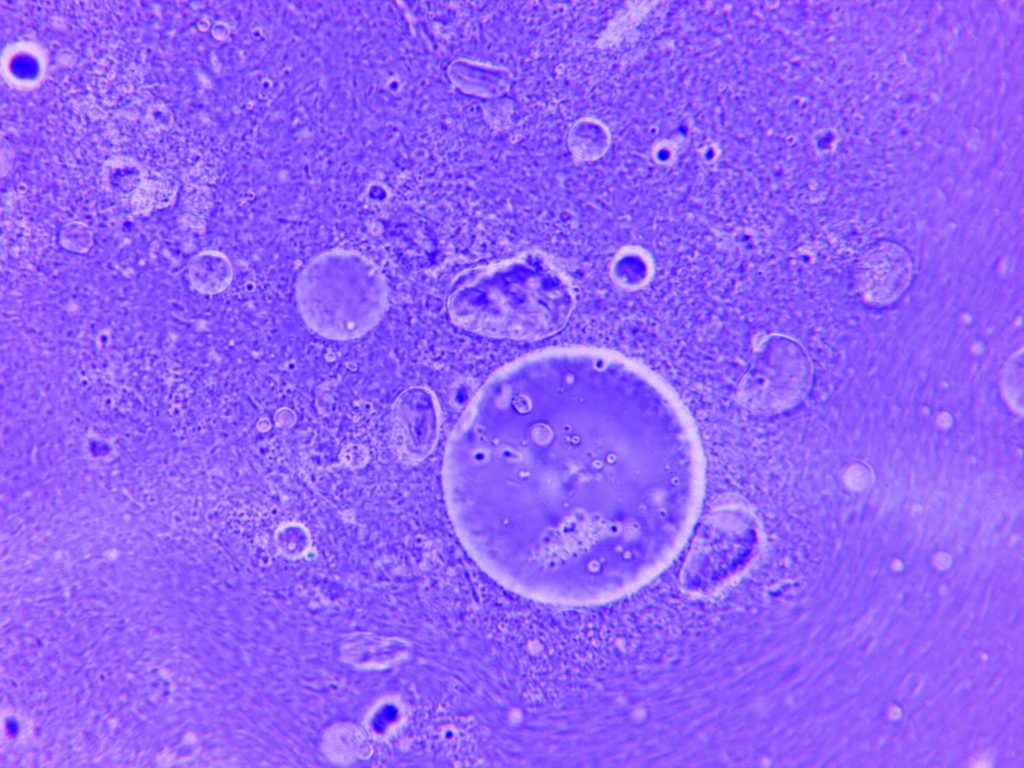
Blastocystis is a single-celled eukaryote (a cell with a nucleus, like our own). It belongs to the Stramenopiles, the same broad group as algae and kelp. It is the most frequently reported protist in human stool samples worldwide. Carriage is often asymptomatic, and its medical relevance has been debated for over a century.
There are many genetic subtypes, with ST1 to ST4 accounting for most human carriage. This diversity helps explain why studies have reached such different conclusions.
Key studies in the evidence review
1. Higher bacterial diversity and lower calprotectin (Nieves-Ramírez et al., 2018). Researchers studied 156 asymptomatic adults in rural Mexico. Blastocystis colonisation was strongly associated with higher bacterial alpha diversity and broad shifts in community composition. Faecal calprotectin, a marker of intestinal inflammation, was markedly lower in carriers. The authors proposed that Blastocystis may act as an “ecosystem engineer”.
2. Common in health, rare in IBD (Tito et al., 2019, Gut). In the Flemish Gut Flora Project, Blastocystis was found in 30% of 616 healthy people but only 4% of 107 patients with IBD. Its presence was linked to microbial richness and diversity. Among the host factors studied, only age was associated with carriage.
3. The largest study to date (Piperni et al., 2024, Cell). This international team analysed 56,989 gut metagenomes from 32 countries. Blastocystis presence was:
- associated with more favourable cardiometabolic profiles;
- negatively associated with obesity and with disorders linked to altered gut ecology;
- more common in people eating healthier, plant-based diets.
In a diet intervention involving 1,124 people, improving diet quality was linked to weight loss and to increases in Blastocystis prevalence and abundance. Blastocystis was hardly ever found in newborns, which suggests it is acquired later in life. (For transparency: one of the collaborating companies holds patent applications on Blastocystis.)
4. A dual role depending on subtype (Lancet Microbe, 2025). This review describes how some subtypes may worsen gut inflammation by disrupting the epithelial barrier, while others may protect it by strengthening barrier integrity. It also discusses Blastocystis as a potential biomarker of gut health.
5. A “microbiome within a microbe” (Shaw et al., 2026). Older microscopy studies reported bacterial- and viral-like particles inside Blastocystis cells. This suggests its behaviour may depend on its own internal partners, which would add another layer of complexity.
6. Why so little is known. Blastocystis is difficult to grow in the laboratory, because many techniques developed for bacteria kill it. This is one focus of the new NIH-funded programme led by Dr Abigail Lind at Georgia Tech (2026).
Blastocystis and biomarkers: how to connect the dots
For clinicians, the most useful question is not “Is Blastocystis good or bad?” but “What does it tell me alongside everything else?” Below is a practical way to relate a Blastocystis result to the biomarkers we already use. These are associations from observational research, not proof of cause and effect.
Gut ecology markers
- Microbial diversity (alpha diversity). This is the most consistent finding across studies. Carriers tend to have richer, more diverse bacterial communities. On a stool microbiome report, Blastocystis often appears together with high diversity.
- Faecal calprotectin. Carriers in the Mexican cohort had markedly lower calprotectin. A positive Blastocystis result with a raised calprotectin should therefore not be dismissed as harmless. It calls for further investigation.
- Stool consistency. Stool form (for example, the Bristol Stool Scale) reflects transit time, which shapes the whole ecosystem. It is worth recording alongside any microbiome result.
Cardiometabolic markers
In the Cell study, Blastocystis carriers had more favourable cardiometabolic profiles and lower rates of obesity. In practice, it makes sense to read the result next to:
- body mass index (BMI) and waist circumference;
- the lipid profile;
- fasting glucose and HbA1c;
- systemic inflammation markers such as high-sensitivity C-reactive protein (hs-CRP).
Because healthier diets were linked to higher Blastocystis prevalence, its presence may partly reflect diet quality, especially fibre and plant diversity.
Gut–brain axis markers
From a neurogastroenterology perspective, this area is the most intriguing and the least mature. The 2025 Lancet Microbe review describes associations between Blastocystis colonisation and cognitive and behavioural changes, mediated through shifts in gut microbial composition and metabolites. Research in irritable bowel syndrome (IBS), a disorder of gut–brain interaction, remains contradictory. It is still unclear whether Blastocystis contributes to symptoms or simply reflects an altered gut environment. For now, symptom scores, stress and sleep should be assessed alongside, not inferred from, a stool result.
What this means for you
If you are a patient
If a stool test shows Blastocystis, it is not automatically a cause for alarm. Many healthy people carry it without symptoms, and in large studies it is often a sign of a diverse, well-fed gut ecosystem. Whether it matters depends on:
- your symptoms: persistent diarrhoea, abdominal pain, bloating or weight loss deserve medical assessment;
- your other results, such as calprotectin, blood tests and the rest of your microbiome profile;
- the subtype and testing method, where available.
Please do not start antiparasitic treatment, cleanses or restrictive diets on your own because of a single result. Equally, there is no evidence that you should try to “acquire” Blastocystis. The most reliable way to support your whole gut ecosystem remains the same: a varied, fibre-rich, mostly plant-based diet, good sleep, stress management and regular movement.
If you are a healthcare professional
- Interpret in context. An asymptomatic positive finding with normal inflammatory markers rarely justifies eradication therapy. Symptomatic patients with raised markers need a full differential diagnosis.
- Know your test. Microscopy is microscopist-dependent and has modest sensitivity. PCR and sequencing-based methods detect more carriers and can identify subtypes. Results from different methods are not directly comparable.
- Think ecologically. Consider Blastocystis one signal within the ecosystem, alongside diversity, calprotectin, metabolic markers and diet history.
- Watch this space. Longitudinal human studies are still needed to show whether Blastocystis has an independent role in health outcomes.
Key takeaways
- The gut microbiome is a multi-kingdom ecosystem of bacteria, fungi, viruses, archaea and protists.
- Blastocystis is the most common gut protist. It is often found in healthy people and is linked to higher microbial diversity, lower faecal calprotectin and better cardiometabolic profiles.
- Its effects appear to depend on subtype, the wider microbiome and the host. Some subtypes may harm the gut barrier, while others may protect it.
- A positive result needs context: symptoms, inflammatory markers and diet matter more than the label.
- Diet quality is linked to Blastocystis carriage, which is another reason to eat a diverse, plant-rich diet.
Frequently asked questions
Is Blastocystis a parasite? It was historically classed as one. Current evidence suggests it is often a harmless or even beneficial member of the gut microbiome, although some subtypes may cause problems in some people.
Should Blastocystis be treated? Not routinely when you have no symptoms. Treatment decisions should be made by your doctor, based on symptoms and other test results.
Can diet influence Blastocystis? Observational and intervention data link healthier, plant-based diets with higher Blastocystis prevalence. However, the goal is a healthy ecosystem, not targeting a single organism.
Is Blastocystis linked to the gut–brain axis? Early research suggests associations with cognitive and behavioural changes through the microbiome and its metabolites. This research is still at an early stage.
Take care of your whole gut ecosystem
At Smart Nutrition International, we interpret your gut health through the lens of the whole ecosystem, connecting your symptoms, biomarkers and diet. Our approach combines clinical nutrition, microbiome science and the gut–brain axis.
- Discover our Gut Health programme
- Explore Mental Health Nutrition and the gut–brain axis
- See all our services
- Read more on our blog
This article is for educational purposes and does not replace individual medical advice.
References
- Piperni E, Nguyen LH, Manghi P, et al. Intestinal Blastocystis is linked to healthier diets and more favorable cardiometabolic outcomes in 56,989 individuals from 32 countries. Cell. 2024;187(17):4554–4570.e18. doi:10.1016/j.cell.2024.06.018
- Nieves-Ramírez ME, Partida-Rodríguez O, Laforest-Lapointe I, et al. Asymptomatic intestinal colonization with protist Blastocystis is strongly associated with distinct microbiome ecological patterns. mSystems. 2018;3(3):e00007-18. doi:10.1128/mSystems.00007-18
- Tito RY, Chaffron S, Caenepeel C, et al. Population-level analysis of Blastocystis subtype prevalence and variation in the human gut microbiota. Gut. 2019;68(7):1180–1189. doi:10.1136/gutjnl-2018-316106
- From parasite to partner: unravelling the multifaceted role of Blastocystis in human health and disease. Lancet Microbe. 2025;6(9):101155. doi:10.1016/j.lanmic.2025.101155
- Shaw D, Gentekaki E, Tsaousis AD. The microbiome within a microbe: rethinking Blastocystis biology. J Eukaryot Microbiol. 2026;73(1):e70056. doi:10.1111/jeu.70056
- Guadano-Procesi I, García Ramos A, Gentekaki E, Tsaousis AD. Exploring Blastocystis: hidden complexity in a common intestinal microbe. J Med Microbiol. 2026;75(10):002198. doi:10.1099/jmm.0.002198
- Olyaiee A, Sadeghi A, Yadegar A, Mirsamadi ES, Mirjalali H. Gut microbiota shifting in irritable bowel syndrome: the mysterious role of Blastocystis sp. Front Med. 2022;9:890127. doi:10.3389/fmed.2022.890127
- Matijašić M, Meštrović T, Čipčić Paljetak H, et al. Gut microbiota beyond bacteria – mycobiome, virome, archaeome, and eukaryotic parasites in IBD. Int J Mol Sci. 2020;21(8):2668. doi:10.3390/ijms21082668
- Neglected kingdoms: the gut virome, mycobiome and their role in inflammatory bowel disease. Gut Microbes. 2026;18(1):2653288. doi:10.1080/19490976.2026.2653288
- NIH funding advances research into overlooked organisms in the human gut. News-Medical Life Sciences. 13 November 2026. news-medical.net
